Espresso Coming Out Too Fast? What the Manuals Say to Check First
Espresso coming out too fast means the puck isn’t resisting the pump. Breville, Gaggia and De’Longhi manuals point to the same five causes. Here is the order to check them, and the one case where grinding finer won’t help.
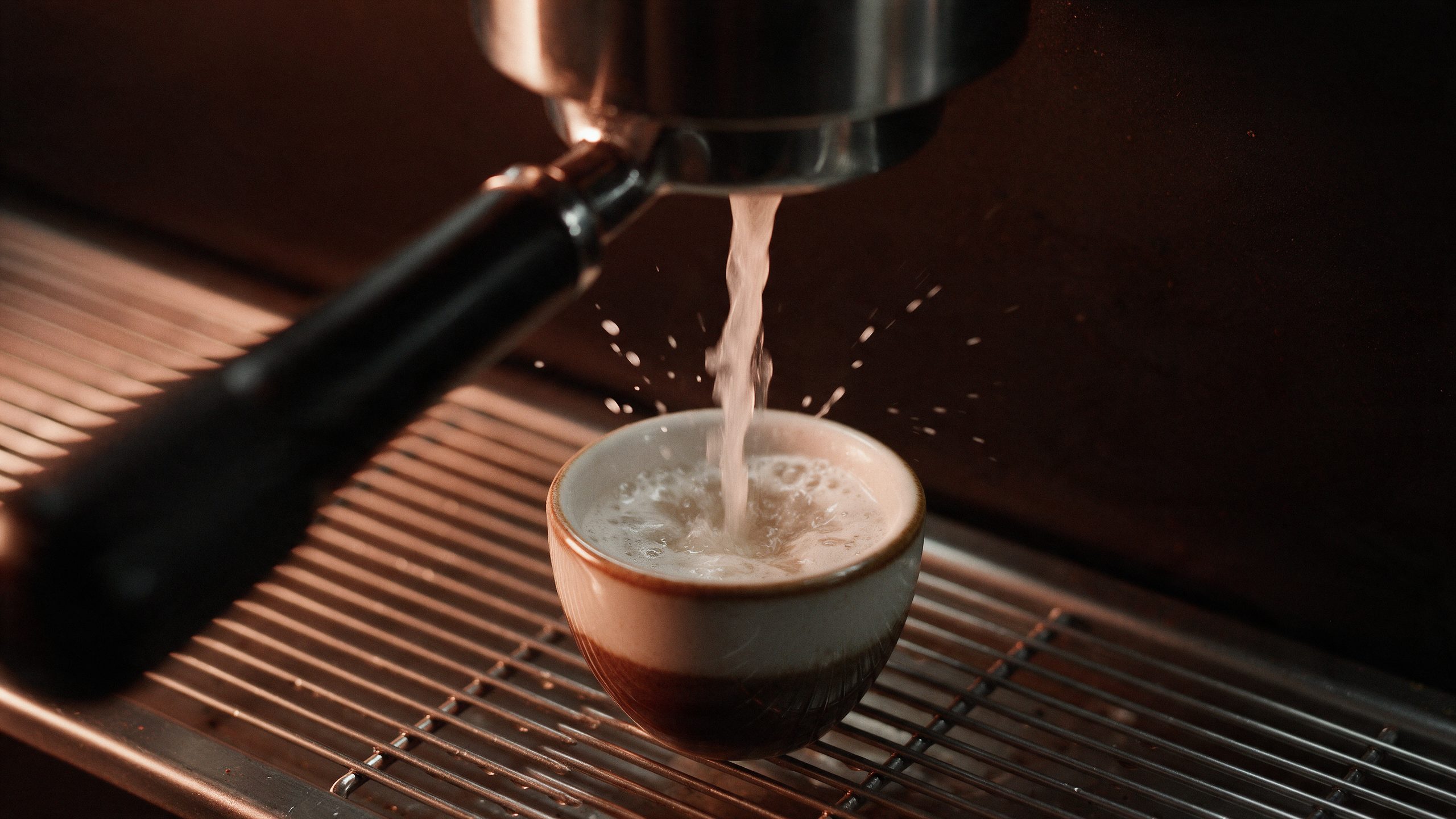
Espresso coming out too fast is the most common first-week problem on a home machine, and it has the shortest list of causes. The pump is doing its job; the coffee bed just isn’t pushing back. Breville’s Barista Express manual, Gaggia’s Classic manual and De’Longhi’s Dedica support pages describe the same fault from different angles, and between them they name five things to check: grind, dose, tamp, bean freshness, and the basket you’re using. This page puts those five in the order that wastes the fewest shots, and covers the one situation where grinding finer won’t help at all.
Short answer
A fast shot means the puck offers too little resistance. Grind finer in small steps first, then confirm the basket holds its rated dose, then check that the beans are fresh. If the shot is still fast on the finest setting with fresh coffee, look at the basket type and the grinder’s range before blaming the machine.
Reasoned. Nothing here comes from shots pulled on this site; there is no espresso machine to pull them on. What follows is the manufacturers’ own troubleshooting logic, read in full and sorted by how cheap each check is. Grind is first because it is reversible in one turn of a dial. Dose and tamp take a scale and thirty seconds. Beans and baskets come last because fixing them costs money or a trip to the store.
Espresso coming out too fast: what it looks like, by the manuals’ numbers
Documented. Breville’s Barista Express (BES870) manual has a page it calls the extraction guide. A shot within what it labels the espresso range starts flowing four to seven seconds after the button is pressed, pours “slow like warm honey,” and takes 25 to 35 seconds. A shot under that range starts in one to three seconds, flows “fast like water,” finishes in under 20 seconds, and shows a thin, pale crema. The manual’s taste line for that fast shot is worth remembering for later: “bitter/sharp, weak and watery,” all at once.
Documented. Gaggia’s Classic manual uses the same cutoff without a gauge. Its malfunction table has a row for “the coffee brews too fast (less than 20 seconds)” and tells the owner to make sure the coffee “has not been ground too coarsely” and “has been pressed with the tamper.” De’Longhi frames the fault from the cup end: the Dedica support page for crema that is “too light (delivered from the spout too fast)” points first at beans that may not be fresh.
Reasoned. The first drops tell you more than the stopwatch total: Breville says a flow that starts in under three seconds already means the basket is under-dosed, the grind is too coarse, or both. A shot can reach 25 seconds and still be a fast shot if most of that time was a gush you cut off early.
The five causes, in the order to check them
| What you see | Likely cause | What to check first |
|---|---|---|
| Flow starts in under 3 seconds, thin and pale, same beans as last week | Grind drifted coarse, or the setting was bumped | Grind one step finer, same dose, pull again |
| Fast shot and the tamper sits well below the basket rim after tamping | Under-dosed basket, too much headspace | Weigh the dose against the basket’s rated range |
| Fast shot, puck is lopsided or cracked when knocked out | Light or uneven tamp | Tamp level, same pressure every time |
| Shots got faster over two or three weeks on the same setting | Beans past their peak, or pre-ground coffee gone flat | Check the roast date before touching the grinder |
| Fast and uneven: one spout gushes, the other dribbles | Channeling, not a whole-puck resistance problem | Distribution before tamping, not a finer grind |
| Still fast at the grinder’s finest setting with fresh beans | Pressurized basket, or a grinder that can’t reach espresso range | Basket type first, then the grinder’s internal adjustment |
1. Grind too coarse
Documented. Breville puts it plainly on the grind page of the BES870 manual: “If the grind is too coarse the water will flow through the ground coffee in the filter basket too quickly. The resulting espresso will be UNDER EXTRACTED and lacking in color and flavor.” Its troubleshooting row for “espresso runs out too quickly” sends the owner to a slightly finer grind. That row contains a slip in the US print of the manual: it lists coffee “ground too finely” as the cause while the fix column says to grind finer. The grind page and the extraction guide are unambiguous, so trust those.
Reasoned. Grind goes first because it moves flow resistance more than any other single variable, and because it is the easiest change to undo. One step at a time, with a fresh dose for each step. Changing grind and dose together is how people end up with a 22-second shot that tastes wrong and no idea which change did it. The dial-in chart on this site lays out that order of operations for every symptom, not just a fast one.
2. Not enough coffee in the basket
Documented. Breville rates its single-wall baskets at roughly 8 to 10 grams for the one-cup and 15 to 18 grams for the two-cup, and its second listed cause for a fast shot is “not enough coffee in the filter basket.” Its visual check is the tamper itself: after tamping, the top edge of the tamper’s metal cap should sit level with the top of the basket. Gaggia keeps it to one level scoop per cup, and its table asks the same question: is there enough coffee.
Reasoned. An under-dosed basket fails twice. The bed is shallower, so water has less coffee to get through, and the gap above the puck fills with water before the pump has anything to push against. A scale that reads to a tenth of a gram settles it in one shot; 14 grams in a basket rated for 18 runs fast on almost any grind.
3. A light or uneven tamp
Documented. Both manuals list tamping as a cause of a fast shot, and both are careful about how. Breville asks for roughly 30 to 40 pounds (15 to 20 kilograms) of pressure and then adds that “the amount of pressure is not as important as consistent pressure every time.” Gaggia’s introduction to the Classic warns against pressing too little, so the coffee does not come out too fast, and against pressing too much, which makes delivery very difficult.
Reasoned. Tamping is third, not first, because past a modest threshold more force changes very little. What a light tamp usually leaves behind is not a loose puck so much as an uneven one, with a low corner that water finds first. If the knocked-out puck is cracked, tilted, or wetter on one side, the fix is a level tamp, not a harder one.
4. Beans that have gone flat
Documented. This is the cause owners skip, and it is the one De’Longhi lists first. Its Dedica support page for coffee delivered “too fast” with light crema names one cause: the beans may not be fresh, and it advises an airtight container once the bag is open. Breville’s “no crema” row gives a window: use beans with a roasted-on date and consume them between 5 and 20 days after it; pre-ground coffee should be used within a week of grinding. Gaggia’s row for espresso that “is not creamy enough” asks whether the coffee is “too old or dry.”
Reasoned. Freshly roasted coffee still holds gas, and that gas adds to the resistance the bed puts up during a shot. As the weeks pass it leaves, and the setting that gave 28 seconds in week one gives 18 in week four with nothing else changed. “My shots got faster and I didn’t touch anything” is almost always a bean-age story. Grinding finer masks it for a while, but the setting keeps creeping until the next fresh bag, when the shot suddenly chokes.
5. Channeling: fast and uneven
Reasoned. The four causes above lower resistance across the whole puck. Channeling lowers it in one spot. Water finds a crack, a void or a dry pocket, rushes through it, and the rest of the bed barely gets wet. The tells are different from a plain coarse grind: the two spouts pour at different rates, the stream sprays or wanders, and the knocked-out puck has a pinhole or a trench. Grinding finer makes it worse, because a denser bed pushes even more water toward the weak point. Espresso channeling has its own page here; the short version is that distribution before the tamp, not the grinder, is where the fix lives.
Fast and watery, or fast and bitter?
Reasoned. Most fast shots taste sour, thin and watery, with a crema that fades before the cup reaches the table. That is under-extraction, and the list above covers it. The confusing case is a fast shot that tastes bitter. Breville’s own description of an under-range shot pairs “bitter/sharp” with “weak and watery” on the same line, so bitterness alone does not prove over-extraction. A dark roast tastes bitter at almost any extraction, and a channeled shot can be both at once: the water that rushed through the crack over-extracted one patch while the rest sat under-extracted. If the shot was fast and bitter, check for channeling and the roast level before grinding coarser. The taste diagnosis table on this site sorts those flavors by cause.
When grinding finer doesn’t work
Documented. Two basket facts explain most of the “finest setting, still gushing” forum posts. Breville ships the Barista Express with two sets of baskets: dual-wall baskets for pre-ground coffee and single-wall baskets for freshly ground beans. Gaggia’s Classic comes with its “crema perfetta” filter fitted, which the manual says must only be used together with the frothing jet device, and it tells owners who prefer the traditional filter to remove both parts.
Reasoned. A pressurized basket builds its own resistance through a tiny exit hole, which is why it hides a coarse grind, and why it also hides a grinder that cannot reach espresso fineness. Move to the single-wall basket and a grinder built for drip coffee is exposed: the shot runs fast on every setting. Some integrated grinders have a second, internal adjustment beyond the external dial; the manual for your model says whether yours does. If a non-pressurized basket, an espresso grinder on its finest setting, fresh beans and a full dose still give a 15-second shot, the problem has moved from the puck to the machine, and a machine that is losing pressure is a different diagnosis with its own page. This page is built on documentation, not on a bench test we ran ourselves; see how we evaluate gear we haven’t bench-tested.
The short version
Espresso coming out too fast is a resistance problem, and the manuals agree on where resistance comes from. Grind one step finer and pull again. If the tamper sits low in the basket, weigh the dose. If the puck comes out tilted, fix the tamp, not the force. If the shots have been speeding up for weeks, read the roast date. If one spout gushes while the other drips, it is channeling and the grinder is the wrong tool. And if the finest setting still runs like water, check which basket you are using before deciding anything is broken. Change one thing, pull one shot, taste it, then change the next.